Best Ontario canoe trips for experienced paddlers
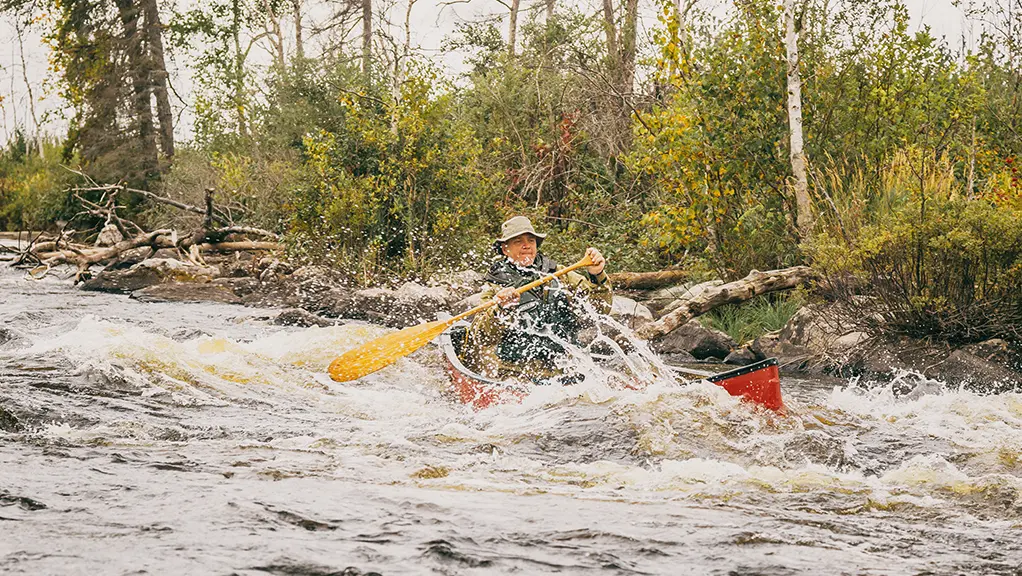
Wabakimi Provincial Park
From Algonquin and Muskoka to Temagami, Quetico and Wabakimi in the far north, Ontario offers majestic windswept pines, Canadian Shield shores, free-flowing waterways, rivers and ancient canoe routes.
The challenges of embarking on these rugged Ontario canoe routes are well worth the reward for skilled paddlers and canoe trippers.
Northwest Ontario
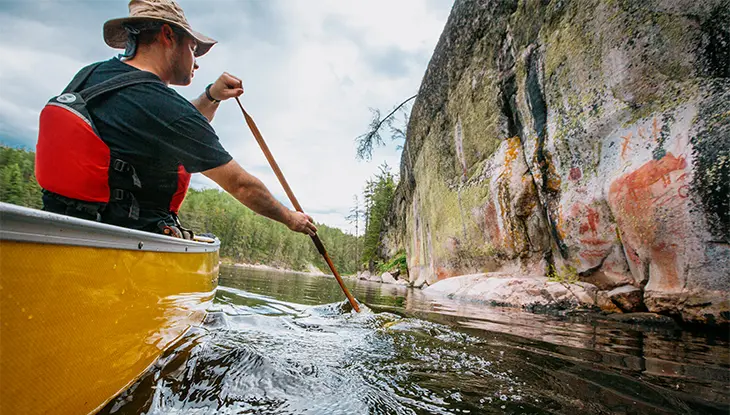
Steel River canoe route
Equal parts lake and river, the Steel River stands apart from Ontario’s other iconic canoe rivers for two main reasons: it’s a loop trip and can be paddled throughout the canoeing season. These attributes make the logistics of this eight- to 10-day trip a little easier.
The journey begins (and ends) at Santoy Lake, a long body of water cradled by towering hills north of Lake Superior, about 25 kilometres east of Terrace Bay.
Challenging portages, including the notoriously steep and rugged Diablo Portage, connect a string of large lakes as you head north. The route reaches its most northern point at Steel Lake, where you head east and eventually south, down the wild Steel River. This remote waterway includes some class I and II rapids, as well as several portages around steep cascades and waterfalls, ultimately flowing back to Santoy Lake.
Local guides and outfitters
This route traverses Crown Land and a non-operating provincial park. Canadian citizens are not required to pay camping fees on Crown Land. Non-residents must purchase a Crown Land Camping Permit or use an outfitter such as SAND Adventures, which also offers vehicle shuttles to intermediate access points along the Steel River and route information.
Wabakimi Provincial Park
Wabakimi is an enormous, protected park north of Thunder Bay, beloved by wilderness canoeists. It spans an area larger than Minnesota’s Boundary Waters and Quetico Provincial Park combined.
For a weeklong Wabakimi canoe trip, load up your canoe and gear and take the VIA passenger train from the town of Armstrong, 250 kilometres north of Thunder Bay, to the stop at Flindt Landing. From there, trace the smooth-flowing Flindt River north through lakes and narrows. Portages are available around all the rapids, making it suitable for novice moving-water paddlers (or for upstream travel). The Flindt eventually flows into Wabakimi Lake, a crossroads of early canoe routes. Plan a floatplane pickup from Wabakimi Lake or extend your journey north to Kenoji Lake and beyond.
Local guides and outfitters
Armstrong-based Wabikimi Outfitters are trusted experts with decades of experience offering full trip planning services, including train tickets and floatplane shuttles, outfitting and lightweight canoe rentals. The company lost much of its lodging facilities in the 2026 wildfires, but its outfitting services remain as it rebuilds for the future.
Woodland Caribou Provincial Park
Woodland Caribou Provincial Park has earned global recognition for pristine waterways, untouched boreal forest ecosystems and unique wildlife. The park is part of the Pimachiowin Aki UNESCO World Heritage Site, which extends from northwestern Ontario to across the Manitoba border.
Dozens of paddling routes are available in Woodland Caribou, including the Bloodvein River, a Canadian Heritage waterway. This canoeing route is best suited for advanced paddlers with whitewater experience.
An ideal three-week trip starts in the town of Red Lake, about an eight-hour drive from Thunder Bay, to access the Bloodvein headwaters and canoe the entire river to Lake Winnipeg. Two-week circuits take in Bloodvein’s headwaters, avoiding the river’s powerful whitewater sections, and loop back to road access at Red Lake. To take in the best of the Bloodvein in a shorter timeframe, charter a floatplane for a Woodland Caribou fly-in canoe trip.
Local guides and outfitters
Goldseekers Canoe Outfitting can help with trip-planning logistics, including vehicle shuttles and floatplane charters. The company also offers canoe and gear rentals.
Quetico Provincial Park
West of Thunder Bay and north of the Minnesota border, Quetico Provincial Park is a wilderness park known for exceptional backcountry canoeing.
Hunter Island Loop is a classic Quetico canoeing route. It highlights one of Ontario’s most renowned destinations for wilderness paddlers. You can start the loop in several places. The French Lake access point is easy to reach off Highway 11, near the town of Atikokan, but it adds some distance to the journey. Heading west (counterclockwise) is most desirable, since it goes with the flow of the Maligne River and allows you to take advantage of prevailing winds along the large bodies of water demarcating the Canada-U.S. border, including Lac La Croix, Crooked Lake and Basswood Lake. These vast, island-filled lakes were central to the voyageur canoe route in the Canadian fur trade more than 200 years ago.
This diverse route includes up to 42 portages. It takes in countless lakes and the waterfalls of the historic Maligne River, with Canadian Shield campsites and sweeping pine trees. Quetico has many connected waterways, so it’s easy to shorten the full two-week Hunter Island loop.
Local guides and outfitters
Atikokan-based Quetico Outfitters offers full canoe trip planning services, including gear and canoe rentals, maps and accommodation arrangements. Voyageur Wilderness Programme offers similar services near the park’s Nym Lake access point. Canoe Canada Outfitters also offers full and partial canoe trip outfitting and lightweight canoe rentals in Atikokan.
Pukaskwa National Park
No portages, big water and spectacular scenery await on the longest stretch of wilderness freshwater coastline in the world. That all sums up the epic 190-kilometre journey on Lake Superior from Pukaskwa National Park to Michipicoten River, near Wawa. Iconic Canadian filmmaker, conservationist and painter Bill Mason immortalized the route, capturing highlights like Cascade Falls and Pointe La Canadienne.
Lake Superior is often described as a freshwater sea, so canoeing requires extreme caution and good judgment. The water is cold throughout the paddling season. In perfect conditions, the trip could be made in a week, but wind and waves (which become more common later in the summer) might make it a two-week venture. Patience is key, as well as the flexibility to paddle early in the morning. A canoe spray cover is a good idea.
Local guides and outfitters
Wawa-based Naturally Superior Adventures and Rock Island Lodge offer canoe rentals and outfitting, vehicle shuttles and waterfront accommodation for before and after your trip.
Northeastern Ontario
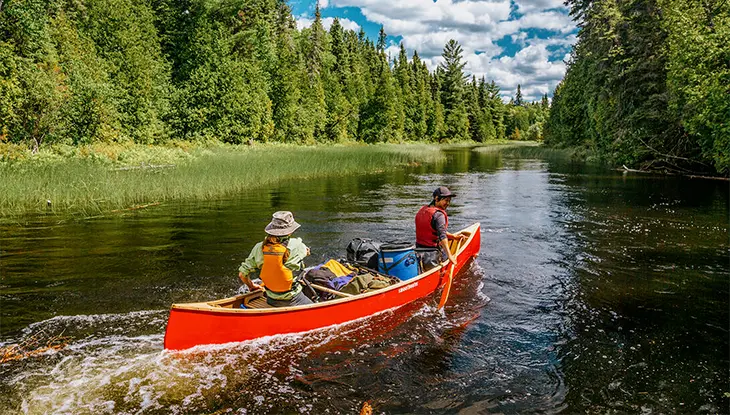
Lady Evelyn-Smoothwater Provincial Park
The remote northwest corner of Temagami canoe country sits at the base of Ishpatina Ridge, the province’s highest landmass.
A challenging 10-day route takes in the best of Lake Evelyn-Smoothwater, Sturgeon River and Solace provincial parks.
Stunning Smoothwater Lake can be accessed by floatplane or on land from Beauty Lake Road, off Highway 560, near the community of Elk Lake. Hiking to the summit of Ishpatina for a lofty view of the surrounding wilderness is a must-do for Temagami paddlers. Continuing south, you’ll enter the upper reaches of the Sturgeon River.
The route becomes especially strenuous when you leave this smooth-flowing waterway and portage west through Solace, Pilgrim and Bluesucker lakes, among others. Remote Florence Lake is a scenic highlight and the gateway to the Lady Evelyn River. As you travel downstream, you’ll encounter rugged portages around countless waterfalls.
Finish the trip with a long traverse of Lady Evelyn Lake, with the option for a side trip to climb Maple Mountain, another regional high point, before ending at Mowat Landing at the end of Highway 558, west of Latchford and Highway 11.
Local guides and outfitters
Smoothwater Outfitters is a Temagami institution, offering a full range of services for canoe trippers, such as trip planning, vehicle shuttles, canoe and gear rentals and accommodations and meals.
Central Ontario
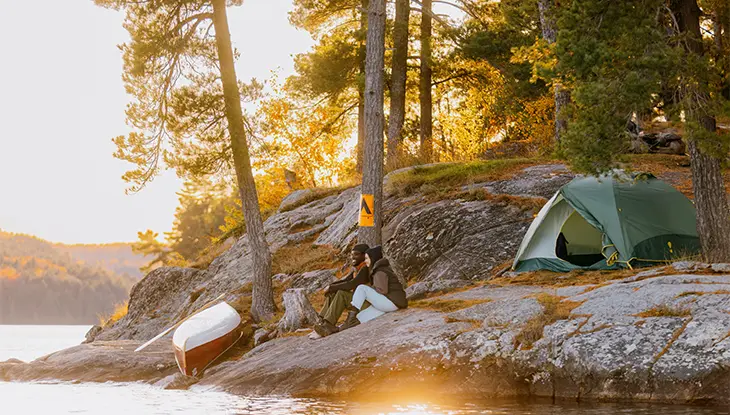
Grant’s Creek Provincial Park
Discover a hidden canoe route along Algonquin’s northern edge. Truly advanced canoe routes are hard to find in central and southern Ontario, but Grant’s Creek stands out as a notable exception, largely because it is rugged and underused.
This multi-day trip starts on Highway 17 in the Ottawa Valley, just west of the town of Stonecliffe. It’s a great way to build up for longer trips. Multiple rapids, waterfalls and other obstructions require nine to 11 portages, coming and going from the turnaround point at Pooh Lake. Along with several other lakes in the area, it’s named after the author A.A. Milne’s famous character, Winnie-the-Pooh.
This route is in a non-operating provincial park, so no camping fees apply for Canadian citizens. Non-residents must purchase a Crown Land Camping Permit.
Local guides and outfitters
Canoe and gear rentals are available from Algonquin North Wilderness Outfitter, on Highway 17 west of the town of Mattawa, as well as Algonquin Portage and Algonquin Bound-Barron Canyon, outside of Pembroke. Driftwood Provincial Park on the Ottawa River is a good place to camp before and after your trip.
Muskoka River X
Muskoka River X is the ultimate canoe challenge for advanced paddlers in central Ontario.
This is wilderness canoe tripping of a different sort. This annual September canoe race challenges extreme paddlers with long distances, tricky navigation and gruelling portages in what’s known as the toughest single-day canoe race in the world. The route changes every year, with previous events spanning the entire width of Algonquin Provincial Park.
Local guides and outfitters
Algonquin Outfitters is a full-service canoe trip outfitter with various locations throughout Muskoka and within Algonquin Provincial Park. In addition to offering everything you need for an Algonquin canoe trip, the company also created the “Meanest Link,” a difficult 420-kilometre circuit that captures some of the region’s greatest paddling highlights and challenges.
Improve your paddling skills
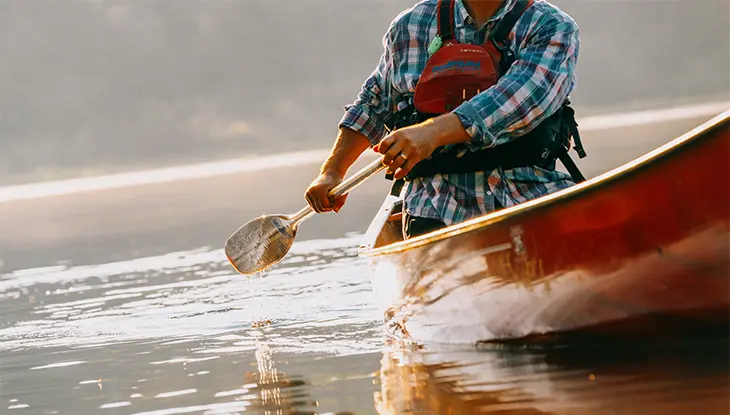
Sign up for certified canoe tripping training with the Ontario Recreational Canoeing and Kayaking Association (ORCKA) or Paddle Canada and take your paddling skills to the next level. You can also join an instructional guided canoe trip, such as MHO Adventures’ expedition on northern Ontario’s Missinaibi River.
Black Feather offers spring canoe tripping and whitewater training programs on the Madawaska River in the Ottawa Valley to freshen up your skills after a long winter.
Register for a family program with one of Ontario’s summer canoe camps, such as Camp Temagami or Camp Wanapitei, to develop canoe tripping skills with your kids.
Essential canoeing gear
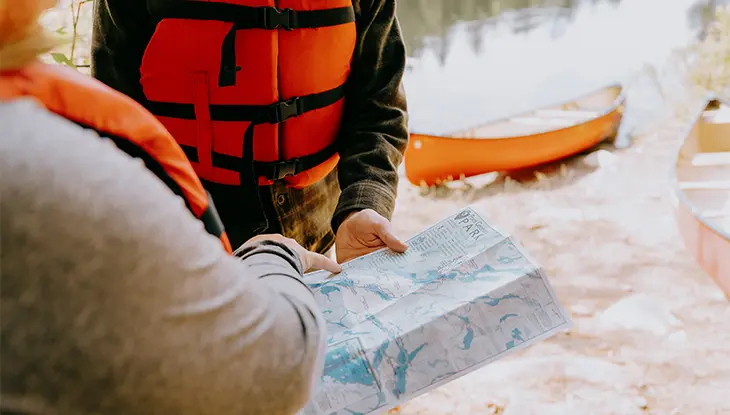
Challenging canoe trips require a high level of self-reliance in addition to advanced paddling skills.
All these routes involve wilderness travel, where cell service is rare and unreliable. Bringing a satellite communicator with an active plan is important for safety.
Navigation skills are also essential. Bring detailed topographic maps for your route and a quality magnetic compass (and know how to use them). Do not rely solely on your smartphone and GPS unit.
You should be familiar with your canoe and tripping gear and ensure it’s up to the wear and tear of remote areas and harsh elements. Always pack a day or two of extra food in case you are delayed by rough weather.
Bring a well-stocked first aid kit and take a wilderness first aid course so you know how to deal with medical emergencies far from help. Similarly, carrying repair items for canoes and gear is essential on challenging trips. A canoe spray cover improves safety on large, exposed lakes and powerful whitewater rivers, but it may be cumbersome for portaging and should not create a false sense of safety.
Good judgment is an advanced paddler’s greatest asset.
Paddling tips and etiquette
The more remote and challenging the canoe route, the fewer the paddlers. This is truly a joy for advanced paddlers, but it means difficult canoe routes may feature unmarked hazards, portages and campsites. Trails may be obscured by fallen trees. Rapids change radically from season to season, so you may face “surprise” portages or arduous wading on wild rivers.
The pristine nature of Ontario’s wildest canoe routes is yet another reminder of the importance of always following the principles of Leave No Trace.
Learn more about backcountry paddling in Ontario parks, including the permits and reservations you need to arrange in advance.
Ontario is home to some of Canada’s best canoeing experiences, with something for every paddler in just about every part of the province, including advanced canoe adventures. Big lakes, wild rivers and extreme solitude are all part of Ontario canoe country.


Last updated: November 13, 2026