Rediscover Black history in Ontario
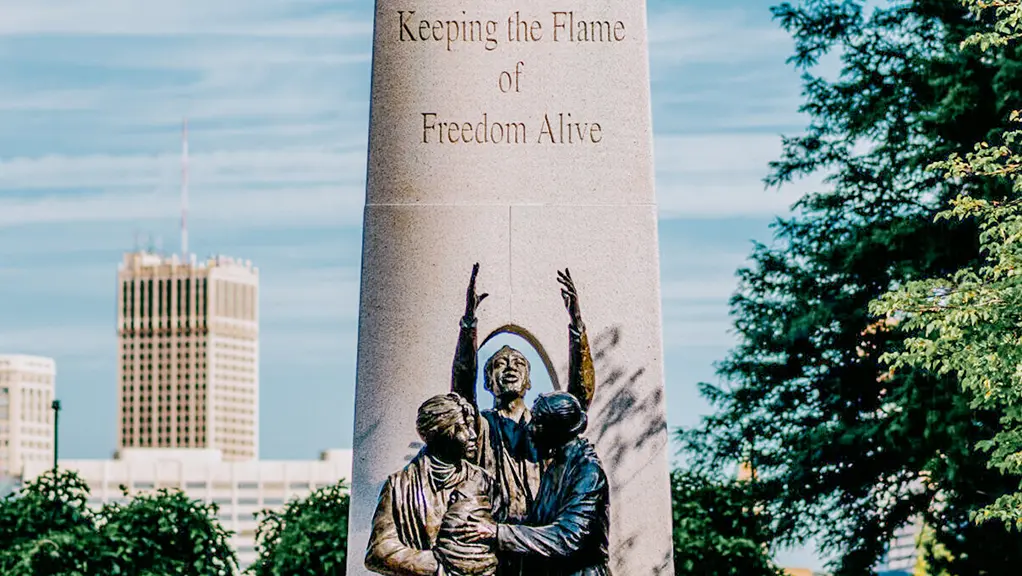
Tower of Freedom Monument | Windsor
Thousands of enslaved and free Black Americans risked the dangerous journey to Upper Canada (now Ontario) to escape the atrocities of slavery in the United States during the 19th century. Many used the Underground Railroad, a network of secret routes developed by people of diverse faiths and races committed to providing safe passage to Canada, where slavery was not legal.
The Underground Railroad featured brave guides (“conductors”) who directed refugees (“passengers”) to their destination (“station”). Along the routes, safehouses served as rest stops for freedom seekers before they continued their long journey.
Their courage is remembered on Emancipation Day in Canada (observed every year on August 1). Commemorating the day the Slavery Abolition Act came into effect across the British Empire, it’s now a day for Canadians to celebrate the perseverance of Black communities and engage in the ongoing fight against discrimination.
Below are places to learn more about the Underground Railroad and early Black settlement in Ontario.
NOTE: Be sure to check online for hours of operation and all requirements before visiting.
Windsor
Visit important Black history heritage sites and monuments that honour emancipation in Windsor.
The Tower of Freedom
Unveiled in 2001, the Underground Railroad monument was created by sculptor Ed Dwight. It captures the emotional exhilaration of freedom seekers once they stepped onto foreign soil. It also acknowledges the various communities in Southern Ontario where freedom seekers settled.
Location: 200 Pitt Street East, Windsor
Sandwich First Baptist Church
Sandwich First Baptist Church was built by former enslaved people and became an important centre in the fight against slavery.
Beyond a place of worship, the church was where innovative and creative ways were developed to free people from slavery. Since many people could not read or write, they memorized hymns and spiritual songs that gave them secret directions on where to find freedom. Certain hymns played during services were coded messages warning that bounty hunters were nearby. The church also has a secret tunnel that provided a safe way to escape danger.
Location: 3652 Peter Street, Windsor
McDougall Street Corridor Walking Tour
Take a self-guided walking tour that celebrates the legacy of Windsor’s famous Black community.
Location: McDougall Street Corridor, Windsor
Essex County
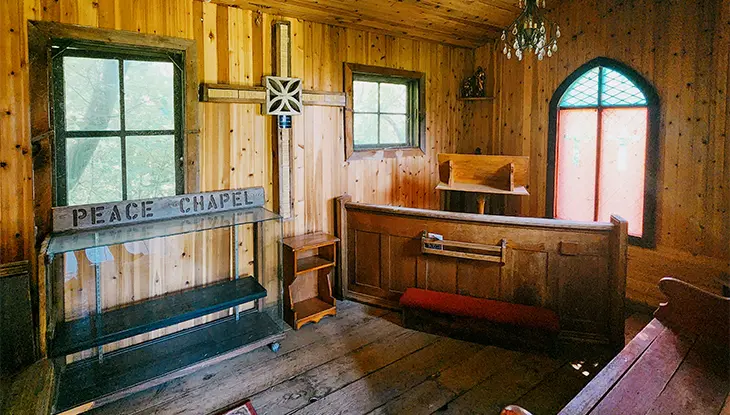
Black settlement was popular in Amherstburg due to its close proximity to the American border.
The Amherstburg Freedom Museum
The Amherstburg Freedom Museum is open year-round and features numerous exhibits that present the stories and achievements of African Canadians.
The museum's complex includes the Nazrey African Methodist Episcopal Church, which provided a safe learning space for those denied an education south of the border. The complex also houses the Taylor Log Cabin, once the home of George Taylor—a former enslaved person.
Walk-in visits are accepted during operating hours and pre-bookings are preferred for groups larger than 10 people. The museum also offers free admission and extended hours on Emancipation Day.
Location: 277 King Street, Amherstburg
John Freeman Walls Historic Site and Underground Railroad Museum
Located 20 minutes east of Windsor, this historic site is named after John Freeman Walls, a freedom seeker from North Carolina who travelled the Underground Railroad with Jane —the wife of his former owner—and her children. The couple eventually got married and the homestead he built was also used as a safehouse for those seeking freedom.
At this significant historic site, the descendants of Walls continue to educate people about his legacy. The eight-hectare property showcases artifacts that remind visitors of the cruelty of slavery and the creative measures taken to secretly transport and hide people from bounty hunters. The site also contains a cemetery and a walkway that recreates the conditions freedom seekers experienced fleeing tracker dogs and bounty hunters.
The museum is open May 15 to Labour Day. Visits can be made by appointment via Facebook or email at wallsugrrmuseumbookings@gmail.com. Interactive classes, workshops and lectures are available outside of the regular season. Contact for more details.
Location: 859 Puce Road, Emeryville
Chatham-Kent
The home of the most successful Black settlement in Canadian history, Chatham-Kent offers many stories about the Underground Railroad.
Buxton National Historic Site & Museum
Descendants of former enslaved people from the Buxton community provide tours and tell stories about the experiences of their ancestors at Buxton National Historic Site & Museum.
The property has a little one-room schoolhouse (built in 1861 and operated until 1967), a museum, a barn and a log cabin.
Check back for the Buxton Homecoming, which celebrates Black history in Chatham and takes place each year during the Labour Day weekend.
Please call ahead or check social media updates before visiting.
Location: 21975 A.D. Shadd Road North Buxton
The Black Historical Society & Black Mecca
The Black Historical Society & Black Mecca transports you along a historical journey from the 1800s to present day.
This tour highlights the excellence achieved by community members in various disciplines, including the arts, medicine, sports and music, as well as the struggles and successes during the fight for civil rights. There’s also an archives area where local residents can learn about their ancestors.
Please call ahead to arrange walking tours.
Location: 177 King Street East, Chatham
BME (Black Methodist Episcopal) Freedom Park
This park is a short walk from Black Historical Society & Black Mecca. It is located where the Black Methodist Episcopal (BME) Church—built by former slaves—once stood. It features a bronze bust of anti-slavery activist and Canada’s first Black woman newspaper publisher, Mary Ann Shadd Cary.
Location: Princess Street South and Wellington Street East
“North Star” barn quilt
This barn quilt is in the BME Freedom Park and is part of the Thames River Barn Quilt Trail. It honours the celestial guide used as a compass to direct brave men and women northbound, where a conductor from the Underground Railroad would be waiting to lead them to freedom.
Dresden
Visit the home of one of the most popular and beloved abolitionists in Dresden.
Josiah Henson Museum of African-Canadian History
The Josiah Henson Museum of African-Canadian History was named after the courageous Josiah Henson, who fled slavery with his wife and four children in 1830 and settled in Dresden. His legacy includes:
A conductor of the Underground Railroad, Henson embarked on many heroic trips and guided over 100 people to freedom. He was also a community leader and helped create the Dawn Settlement, which helped newcomers receive an education and enroll in training programs to become more self-sufficient.
The museum also hosts an annual Emancipation celebration, featuring food and drinks, music and dance performances, crafts and inspirational talks reinforcing the importance of freedom.
Location: 29251 Freedom Road, Dresden
Learn more about the Underground Railroad and the legacy of Black history in the province on a 4-day Black history road trip in Southern Ontario for families.
Niagara
Discover the importance of Niagara in the Underground Railroad.
Niagara Bound Tours
Book a customized historical bus tour that traces various little-known places and stories about the legacy of freedom seekers in Niagara-on-the-Lake, Fort Erie and St. Catharines.
The tour also includes a visit to a civil rights site. Lunch or dinner may be included with your experience.
Visit Niagara Bound Tours on Facebook or Instagram for more information.
R. Nathaniel Dett British Methodist Church
A designated National Historic Site, the R. Nathaniel Dett British Methodist Church was built by members of the local Black community, many of whom had escaped to Canada via the Underground Railroad.
This church was where newly arrived freedom seekers found help, comfort and a sense of belonging as they began new lives in freedom. It is named after R. Nathaniel Dett, a Black parishioner born in Niagara Falls who went on to become a renowned musician and composer of North American sacred music.
Location: 5674 Peer Street, Niagara Falls
Black history along the Niagara River
Plan a trip to Niagara Region and follow the map route that highlights Black heritage along the scenic Niagara River Parkway.
St. Catharines
Despite a large bounty on her head for her capture, famous anti-slavery activist Harriet Tubman risked crossing the border as an Underground Railroad conductor several times. She became known as "Moses" because of her bravery in bringing people to freedom and made St. Catharines her home for 10 years.
Salem Chapel
Widely believed to be the oldest Black church in Ontario, Salem Chapel is the church where Harriet Tubman worshipped. In addition to continuing as a religious institution, the church is considered a sacred destination for its historical significance as a sanctuary and community hub for freedom seekers.
Visit on Emancipation Day for a special tour talk by historian Rochelle Bush, who speaks on the chapel’s role in the history of emancipation.
Location: 92 Geneva Street, St. Catharines
Statue of Harriet Tubman
The bronze portrait sculpture of Harriet Tubman is located at the Harriet Tubman Public School, close to Salem Chapel.
Location: 92 Geneva Street, St. Catharines
Clarksburg
Many freedom seekers living in the southern regions of Ontario migrated to northern regions in search of economic opportunities and out of fear of being kidnapped by bounty hunters, who were actively recapturing people close to the U.S. border.
Sheffield Park Museum
Sheffield Park Museum was established by Howard Sheffield, whose family tree goes back many generations in Canada. Sheffield’s nieces Sylvia and Carolynn Wilson continue their late uncle’s legacy as curators of the museum.
The museum’s collection ranges from memorabilia and vintage dolls to various types of quilts, chains and more, some of which were donated by members of the local community.
Location: 241 Clark Street, Clarksburg
Simcoe County
Discover the untold stories that honour Black history in Simcoe County
Oro African Methodist Episcopal Church
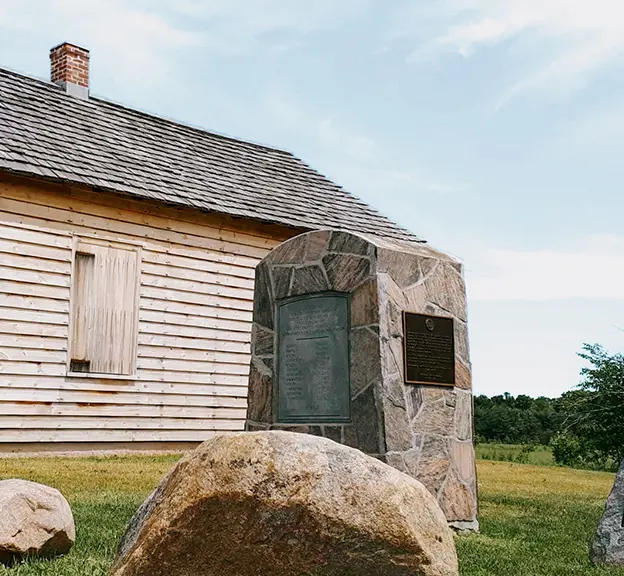
The Oro African Methodist Episcopal Church was built in 1849 and was designated a National Historic Site in 2000.
It’s the oldest log building constructed by African-Canadians and was constructed entirely of wood. Over the years the church fell into serious disrepair, but community members rallied together and collected funds for its restoration and preservation.
The church is not open to the public, but visitors are welcome to explore the grounds.
Location: 1645 Line 3 North, Oro-Medonte
Visit more of the area’s Black history museums, sites and events on a Georgian Bay Black history road trip.
Black history resources
In their unwavering pursuit of freedom, settlers faced harsh weather conditions and experienced racial discrimination. Their struggle for equality and human dignity is a powerful story and their legacy today is a testament to their unbreakable spirit.
Ontario Black History Society
Based in Toronto, the Ontario Black History Society is dedicated to the preservation and promotion of Black history and heritage.
Slavery to Freedom
A key program of The Ontario Heritage Trust, Slavery to Freedom documents an important chapter in Ontario’s history.
Illuminate Black: Shining Light on the Black Presence in Ontario
Visit the Archives of Ontario to explore Black histories from across the province. The Archives’ exhibition, Illuminate Black: Shining Light on the Black Presence in Ontario, will immerse you in local histories from Windsor to Clarksburg to Toronto and beyond. It’s filled with lesser-known stories of heroes, migrants, performers and community builders. The exhibit is on from February 2026 to March 2028.
Plan a trip that traces the powerful and untold chapters about resilience, hope and courage and celebrate the voices that shaped Black history.
Last updated: August 26, 2026