Three steps to ice safety that could save your life
Muskoka
Use extreme caution before heading out on a frozen lake or river in Ontario. Changes in temperature or fresh snowfall can help conceal thin ice. Do not trust that the ice is safe. This is important all season long, but especially in the early winter and late spring.
Take these three critical steps before setting up your fishing rod, lacing up your skates or revving up your snowmobile.
Factors for ice safety
When selecting a body of water, remember ice safety depends on many things, including:
- size of the body of water
- movement of the water, including currents and tides
- current temperatures, and recent and upcoming temperature fluctuations
- changes in water levels
- chemical composition of the water
- depth of the water under the ice
Step 1: Do a visual inspection
Once you have arrived on-site, complete a thorough visual inspection.
During your inspection, keep in mind that logs and rocks absorb heat from the sun, which speeds melting and slows ice formation. If you see any of these signs during your visual inspection, do not step onto the ice:
- cracks, breaks or holes in the ice
- water on top of the ice
- water flowing onto the ice
- ice that’s soft or mushy
- flowing springs in spring-fed ponds and lakes
- ice that appears to have thawed and refrozen
- snow on the ice; snow can warm up the ice as it acts like an insulator
Step 2: Note the colour of the ice
The next step in the inspection is to assess the colour of the ice. Each of these ice colours indicates different things when it comes to the ice’s strength:
Dull grey colour
A dull grey colour of ice means water is present. It is a sure sign of unsafe ice.
This ice will NOT support much weight. Grey ice is common in the spring and in fast-moving water throughout the winter.
Do not venture out on ice that is a dull grey colour.
White opaque colour
White, opaque ice, or snow ice, is only half as strong as blue ice.
It forms when wet snow freezes on the top of existing ice. It can be very dangerous if this ice forms on top of ice that is not fully frozen. When this forms, it takes even longer for the lower-level ice to solidify. This type of ice can cover up danger and has caught even seasoned anglers off guard.
Err on the side of caution and avoid stepping out on white, opaque ice.
Blue ice colour
Blue ice is clear and strong and the safest ice of all. The colour of ice deepens with increasing thickness because water is naturally turquoise blue. It forms when the temperature drops below -8 degrees Celsius.
Step 3: Measure the thickness of the ice
The final step is ice measurement, and this must always be done. Do not test alone; always use the buddy system.
Chip the ice to create a small hole using an axe, hatchet, ice auger or spud bar. Then measure the thickness of the ice. Check the ice thickness around the body of water, as it will seldom be uniform across most lakes and rivers.
Safe thickness for ice skating
When you’re considering heading out for a day of skating, a greater ice thickness is required for a group than for one skater.
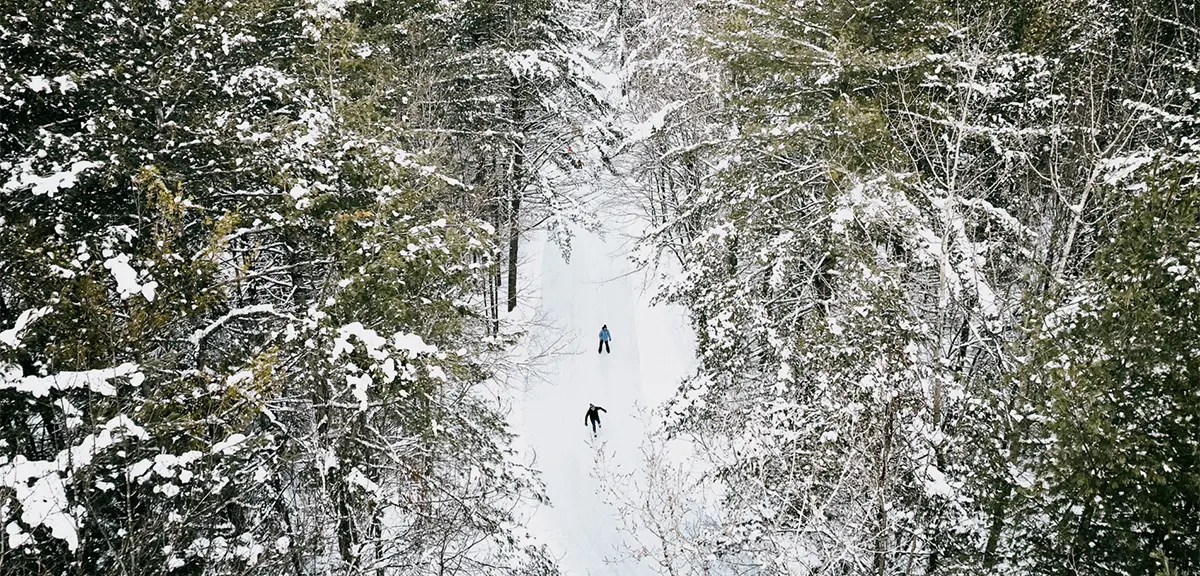
The Canadian Red Cross recommends that ice should be at least 15 centimetres (6 inches) thick to carry a single person, but if you’re with a group of friends for skating or a game of ice hockey, ensure it’s at least 20 centimetres (8 inches) thick.
Safe thickness for snowmobiling
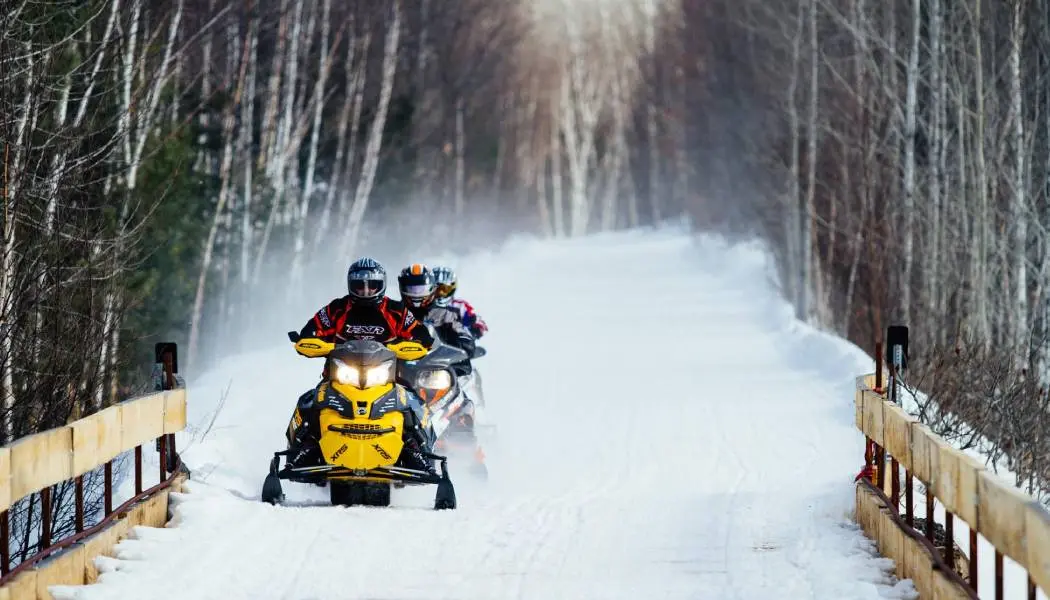
Ice thickness for a sled or snowmobile must be at least 25 centimetres (10 inches). And keep in mind that ice thickness varies, so check the ice depth often as you move around.
Safe thickness for a larger vehicle
According to the Ontario Ministry of Natural Resources, a minimum of 30 centimetres (12 inches) or more is required for driving a light vehicle on ice. Again, remember this is 30 centimetres of blue ice, so double that thickness if the ice is white or opaque.
For quick reference, check the recommended safe ice thicknesses for ice-related activities from the Canadian Red Cross.
Additional tips and information
Before leaving home, check with local authorities on ice thickness and safety. Always ensure you have told someone where you are planning to go and your return time.
Wear appropriate clothing and bring proper equipment for safety and comfort.
And finally, avoid going out on ice at night unless you know it is deemed safe.
What to do if you fall through ice
If you fall through ice, try to remain calm and breath slowly.
Experts agree, it’s best to pull yourself back up onto the ice shelf, remain low and roll away from the opening back towards the shoreline. Do not stand up on the ice.
If someone has fallen through the ice, call 911 immediately for emergency rescue.
Ice fishing licence and regulations
Canadian residents between 18 and 65 years of age require an Outdoors Card and a fishing licence to go ice fishing. There are two types of licences—sport and conservation—and they are valid for one day, eight days, one year or three years. Fishing licences can be purchased online.
Non-residents aged 18 or older also require an Outdoors Card and can purchase a fishing licence for one or three years. If you’re a non-resident under 18 accompanied by a person with a valid Outdoors Card and Fishing Licence, you don’t need either document.
Learn more about fishing in Ontario and review the Ontario Fishing Regulations for restrictions on limits, size, catch and release and open and close seasons for fish species.
Snowmobiling licence and regulations
Snowmobilers in Ontario require a valid licence, insurance, registration and must wear a helmet.
In addition, you’ll need a trail permit to ride on public trails. Learn more about what you need to go snowmobiling safely in Ontario.
Be safe and enjoy the best of Ontario during its epic winter season.
Last updated: May 13, 2026